

 English
 Español
 Türk
Türk 中文简体
中文简体
Home / News Room / Industry News / Comprehensive Guide to Transformer Core: Types, Materials, and Applications
Content
The transformer core is the magnetic heart of every transformer, serving as the pathway through which magnetic flux flows to enable energy transfer between windings. While the copper windings often receive more attention in basic electrical engineering discussions, the core is equally — if not more — critical to a transformer's overall efficiency, size, thermal performance, and operational frequency range. Whether you are designing a power distribution transformer, a high-frequency switching power supply, or a precision audio transformer, understanding the core's role, its material options, and its geometric configurations is fundamental to making the right engineering decisions.
A transformer operates on the principle of electromagnetic induction — an alternating current in the primary winding creates a time-varying magnetic flux, which in turn induces a voltage in the secondary winding. The core provides a low-reluctance path for this magnetic flux, concentrating and guiding it efficiently between the primary and secondary windings rather than allowing it to disperse through the surrounding air. Without a well-designed core, the leakage flux — the portion that fails to link both windings — would be substantial, resulting in poor coupling, high leakage inductance, and significant energy losses.
The core material's magnetic permeability is the primary property that determines how effectively it channels flux. High-permeability materials allow a given magnetomotive force to produce a larger flux density, which means the core can be made smaller and lighter for a given power rating. However, permeability must be balanced against other considerations including core losses, saturation flux density, and frequency response — all of which vary significantly between core material types.
Any practical transformer core dissipates some energy as heat during operation. These core losses come from two distinct physical mechanisms that every transformer designer must account for and minimize.
Hysteresis loss occurs because magnetic domains within the core material resist realignment as the magnetic field reverses direction with each AC cycle. The energy required to overcome this domain resistance is converted directly into heat. The magnitude of hysteresis loss is proportional to the area enclosed by the material's B-H loop — a graphical representation of the relationship between magnetic flux density (B) and magnetic field intensity (H). Materials with a narrow B-H loop, described as magnetically "soft," exhibit low hysteresis loss and are preferred for transformer cores over "hard" magnetic materials used in permanent magnets.
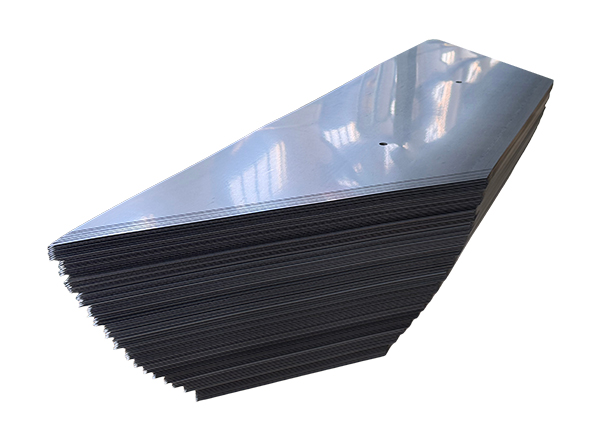
Eddy current loss arises because the core material, being electrically conductive, acts as a short-circuit path for voltages induced by the changing magnetic flux. These circulating currents generate resistive heating. Eddy current losses increase with the square of both frequency and lamination thickness, which is why power frequency transformer cores are built from thin laminated sheets insulated from one another — this raises the electrical resistance of eddy current paths and reduces their magnitude considerably.
The selection of core material is one of the most consequential decisions in transformer design. Each material class offers a different trade-off between permeability, saturation flux density, core losses, mechanical properties, and cost.
| Material | Relative Permeability | Saturation Flux Density | Best Frequency Range | Typical Applications |
| Silicon Steel (Grain-Oriented) | 1,500 – 40,000 | 1.7 – 2.0 T | 50 – 400 Hz | Power transformers, distribution |
| Silicon Steel (Non-Oriented) | 500 – 8,000 | 1.5 – 1.8 T | 50 – 400 Hz | Motors, small transformers |
| Amorphous Metal Alloy | up to 200,000 | 1.5 – 1.6 T | 50 Hz – 10 kHz | High-efficiency distribution transformers |
| Ferrite (MnZn) | 750 – 15,000 | 0.4 – 0.5 T | 1 kHz – 1 MHz | SMPS, EMI filters, telecom |
| Ferrite (NiZn) | 10 – 2,000 | 0.3 – 0.4 T | 1 MHz – 300 MHz | RF transformers, antenna matching |
| Nanocrystalline Alloy | up to 150,000 | 1.2 – 1.25 T | 50 Hz – 150 kHz | Current transformers, PFC inductors |
| Powdered Iron | 10 – 100 | 1.0 – 1.5 T | Up to 200 kHz | DC inductors, filter chokes |
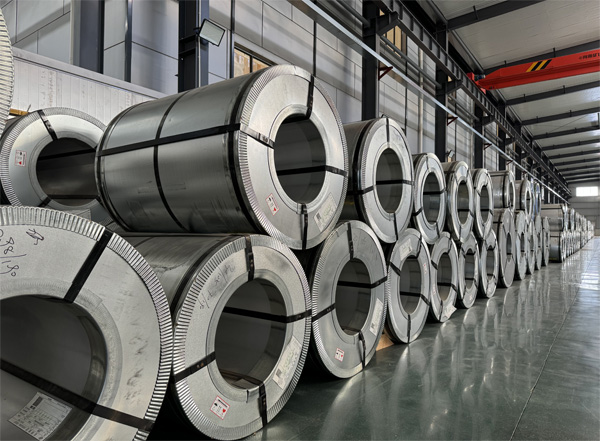
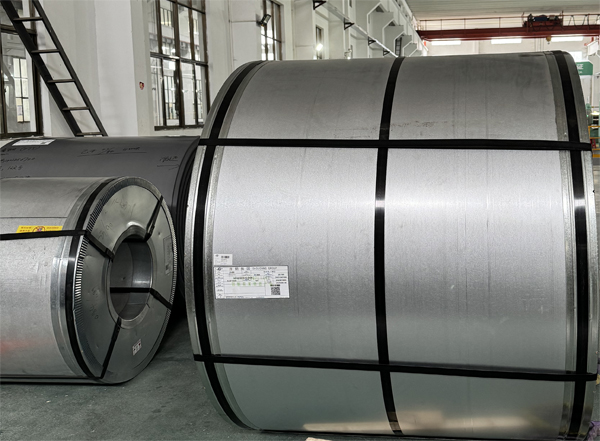
Silicon steel remains the most widely used core material for mains-frequency power transformers due to its combination of high saturation flux density, good permeability, and relatively low cost. Grain-oriented silicon steel, processed to align magnetic domains along the rolling direction, achieves significantly lower core losses than its non-oriented counterpart and is preferred in large-scale power and distribution transformers where efficiency over decades of continuous operation justifies the higher material cost. Amorphous metal alloys offer core losses roughly 70–80% lower than conventional silicon steel at power frequencies, making them increasingly attractive for energy-efficient distribution transformer designs despite their higher cost and mechanical brittleness.
Beyond material selection, the geometric arrangement of the core fundamentally affects how flux flows, how windings are arranged, and ultimately how the transformer performs under load. Several core configurations have been standardized across the industry, each suited to different applications and power levels.
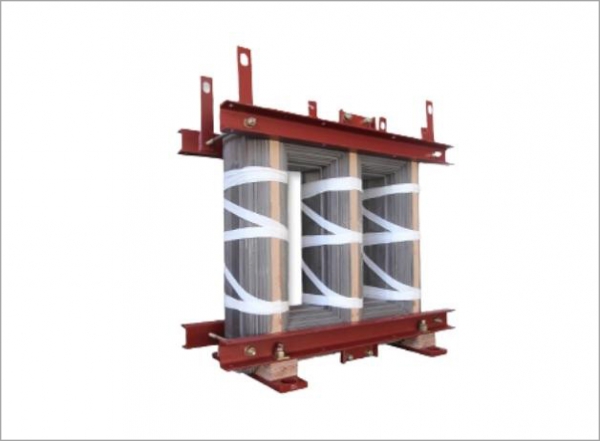
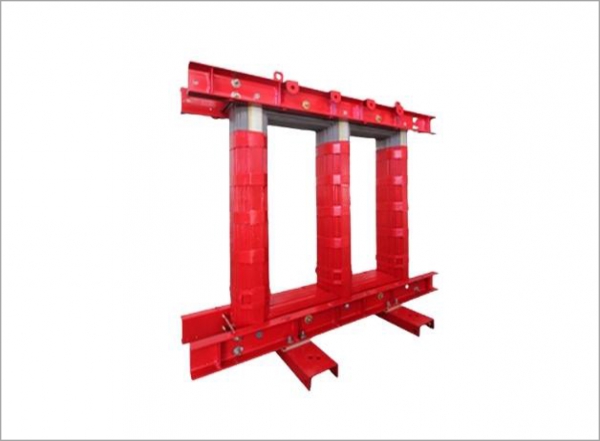
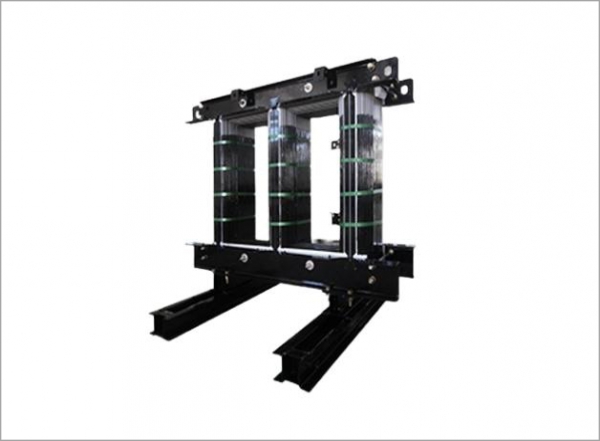
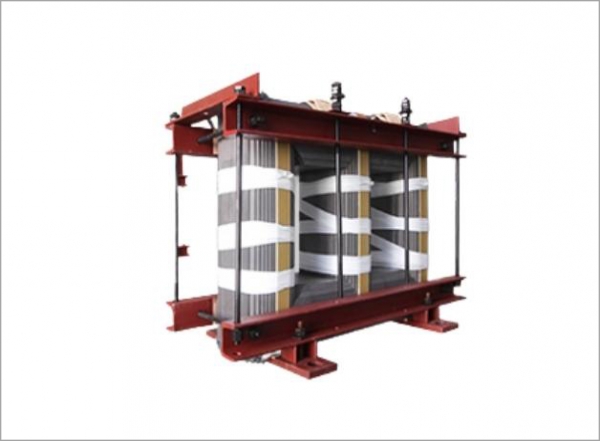
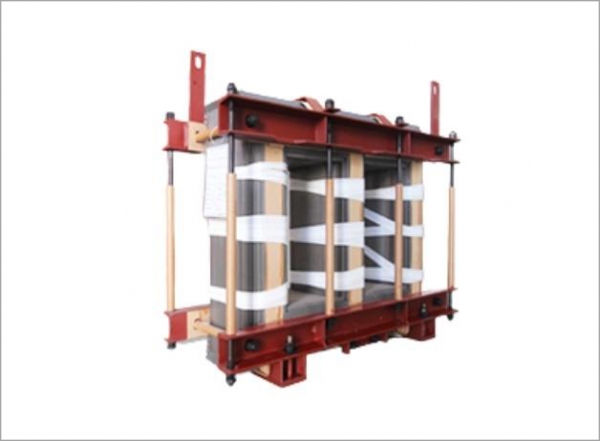
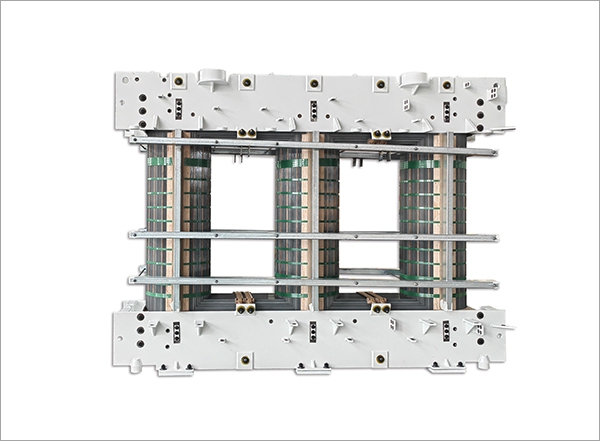
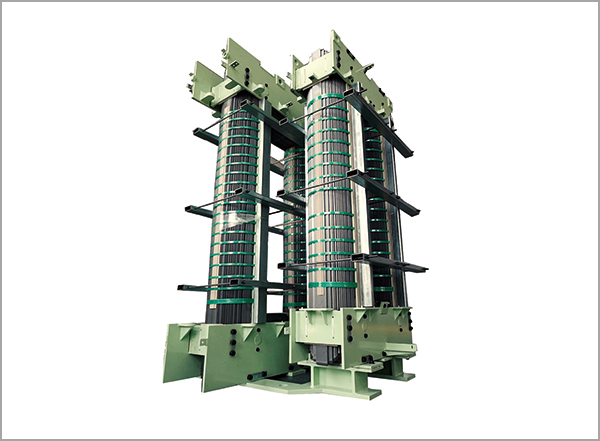
In a core-type transformer, the magnetic core forms a rectangular frame — typically an E-I or U-I lamination stack — around which the windings are wound. Each limb of the core carries a portion of the winding, with the primary and secondary coils either stacked axially on the same limb or distributed across separate limbs. Core-type designs are mechanically straightforward, allow easy access for insulation and cooling, and are the standard configuration for most distribution and power transformers. The single magnetic path of the core-type design also simplifies flux analysis, making it the preferred choice in high-voltage, high-power applications.
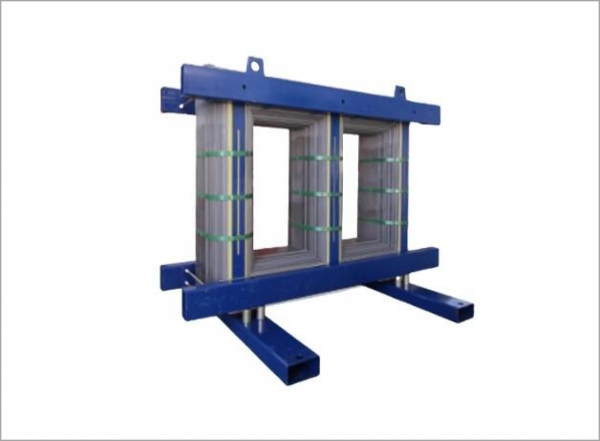
The shell-type core surrounds the windings on multiple sides, with the winding sandwiched between the outer limbs of the core. This arrangement provides the flux with two parallel return paths, effectively halving the cross-section required in each outer limb compared to the central limb. Shell-type transformers offer better mechanical support for the windings, superior short-circuit strength, and are particularly well-suited for low-voltage, high-current applications. They are commonly found in furnace transformers and large power transformers in North American utility designs, where the pancake-style winding arrangement facilitates efficient heat dissipation.
A toroidal core is wound into a donut-shaped ring, with the winding distributed uniformly around its circumference. This geometry creates a nearly closed magnetic circuit with minimal external leakage flux — a significant advantage in applications sensitive to electromagnetic interference (EMI), such as audio equipment, medical instrumentation, and precision measurement systems. Toroidal transformers are also more compact and lighter than equivalent E-I laminated designs, and their symmetrical winding distribution produces excellent regulation. The primary drawback is manufacturing complexity: automated toroidal winding requires specialized equipment, making production more expensive than laminated core alternatives at equivalent power ratings.
High-frequency transformers used in switched-mode power supplies and power electronics predominantly use ferrite cores manufactured in standardized shapes including E-E (two E-shaped halves mated together), E-I, pot cores, PQ cores, RM cores, and planar cores. Each shape optimizes a different aspect of high-frequency performance. Pot cores and RM cores fully enclose the winding, minimizing radiated EMI. Planar cores use flat, low-profile winding arrangements that reduce leakage inductance and improve thermal dissipation — essential in high-frequency, high-density power converters. The standardization of these core shapes by manufacturers such as TDK, Ferroxcube, and Fair-Rite allows designers to select from datasheets and apply established design equations confidently.
While transformers ideally operate with a continuous, unbroken magnetic path to minimize reluctance, certain applications intentionally introduce a small air gap into the core. Unlike the core material, air has a linear B-H relationship and does not saturate — meaning an air gap can store magnetic energy without the flux density collapsing. This property is exploited in inductors and flyback transformers used in switched-mode power supplies, where a controlled amount of energy storage is required within each switching cycle. The air gap also reduces the effective permeability of the core, which broadens the inductance versus current characteristic and makes the component more tolerant of DC bias currents that would otherwise drive a gapless core into saturation.
The gap length must be precisely controlled, as even small variations significantly alter the effective inductance. Distributed gaps — achieved by using powdered iron or similar composite core materials — spread the energy storage across the entire core volume, reducing fringing flux effects and their associated winding losses compared to a single discrete gap.
Selecting the right transformer core for a given application involves evaluating multiple interdependent parameters simultaneously. The following checklist summarizes the key factors that engineers and procurement specialists should systematically address:
Transformer core technology continues to advance in response to demand for higher efficiency, greater power density, and improved performance in wide-bandgap power semiconductor environments. Amorphous and nanocrystalline cores have transitioned from niche to mainstream in energy-efficient distribution transformers, supported by regulatory mandates such as the EU's Ecodesign Directive and DOE efficiency standards for distribution transformers, which have progressively tightened no-load loss limits.
Planar transformer technology, which uses PCB-embedded or stamped copper windings combined with low-profile ferrite cores, has become a dominant form factor in high-frequency, high-power-density converters for telecommunications, electric vehicle on-board chargers, and data center power supplies. The planar geometry enables automated, reproducible manufacturing, tight leakage inductance control, and efficient thermal management through direct contact between windings and heatsinks. Meanwhile, research into soft magnetic composite (SMC) materials — iron powder particles coated with an insulating binder and pressed into complex 3D shapes — opens possibilities for core geometries that are impractical with lamination-based manufacturing, potentially enabling new classes of compact, integrated magnetic components as power electronics continue to evolve toward higher frequencies and greater integration density.

 +86-523 8891 6699
  +86-523 8891 8266
  info@tl-core.com
  No.1, Third Industrial Park, Liangxu Street, Taizhou City, Jiangsu, China
 Copyright © 2024 Taizhou Tianli Iron Core Manufacturing Co., Ltd. All Rights Reserved.




 Home
Home