

 English
 Español
 Türk
Türk 中文简体
中文简体
Home / News Room / Industry News / What Are Silicon Steel Mother Coils and Why Are They Critical to Electrical Manufacturing?
Content
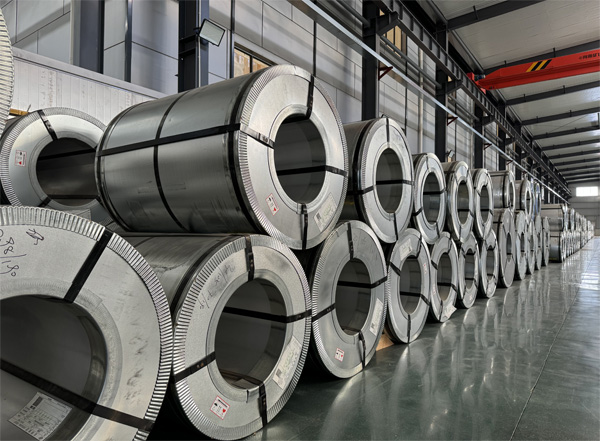
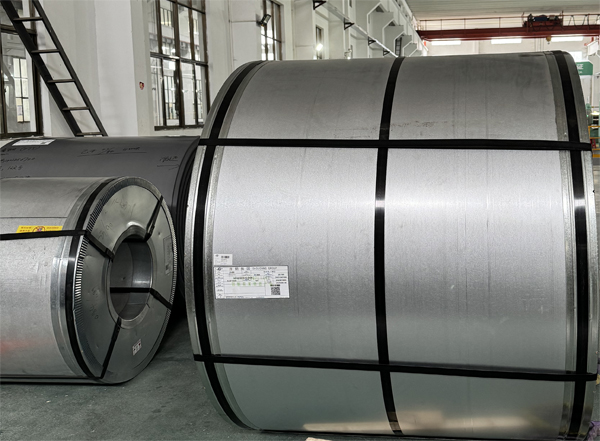
Silicon steel mother coils — also referred to as electrical steel master coils or grain-oriented/non-grain-oriented electrical steel coils — are large-format rolls of silicon-alloyed steel produced at steel mills and used as the primary raw material input for downstream processing into narrower strips, laminations, and stampings used in the manufacture of electrical equipment. The term "mother coil" describes the full-width, full-weight coil as it comes directly from the hot or cold rolling and annealing process, before it is slit, cut-to-length, or further processed into the specific dimensions required by transformer manufacturers, motor producers, and generator assemblers.
Silicon, typically added at concentrations between 1% and 4.5% by weight, dramatically improves the magnetic properties of steel by increasing electrical resistivity, reducing hysteresis loss, and enhancing permeability — all of which make the material far more efficient as a core material in electromagnetic applications than plain carbon steel. Mother coils represent the upstream form of this material: wide, heavy, and undivided, they are the starting point from which all silicon steel products for the electrical industry are derived. A single mother coil can weigh anywhere from 5 tonnes to over 30 tonnes and span widths of 600mm to 1,250mm or more, depending on the mill's capabilities and the downstream application requirements.
Silicon steel mother coils are produced in two fundamentally different metallurgical categories, each optimized for a different class of electromagnetic application. Understanding the distinction between these two types is essential for anyone involved in sourcing, processing, or specifying silicon steel for electrical equipment production.
Grain-oriented silicon steel is manufactured through a tightly controlled cold rolling and annealing process that aligns the crystalline grain structure of the steel predominantly in the rolling direction. This alignment — known as the Goss texture — gives the material exceptionally low core loss and high magnetic permeability when the magnetic flux flows parallel to the rolling direction. GOES mother coils are the primary input material for power and distribution transformer cores, where the unidirectional magnetic flux path in wound or stacked core designs allows full exploitation of the grain-oriented properties. Silicon content in GOES is typically around 3% to 3.2%, and the material is available in thicknesses from 0.23mm to 0.35mm for standard grades, with ultra-thin grades down to 0.18mm or less for high-frequency applications.
Non-grain-oriented silicon steel has a more randomly distributed grain structure, giving it more uniform magnetic properties in all directions within the plane of the sheet. This isotropy makes NGOES the preferred choice for rotating electrical machines — electric motors and generators — where the magnetic flux rotates through different directions as the rotor turns. NGOES mother coils are produced in a wider range of silicon contents (from below 1% to above 3.5%) and thicknesses (typically 0.35mm to 0.65mm, with some grades up to 1.0mm), allowing manufacturers to select the right balance between magnetic efficiency and mechanical punchability for their specific motor design and production process.
The quality of silicon steel mother coils is defined by a set of measurable magnetic and physical properties that determine how efficiently the material will perform when incorporated into finished electromagnetic devices. Buyers and processors evaluate these properties carefully when specifying or accepting incoming coil material.
| Property | Description | Relevance |
| Core Loss (W/kg) | Energy dissipated as heat per unit weight per cycle | Lower values = more efficient transformer or motor |
| Magnetic Permeability (H/m) | Ease with which material supports magnetic flux | Higher values = stronger magnetic response |
| Polarization / Induction (T) | Magnetic flux density achieved at a given field strength | Affects core size and material volume required |
| Thickness Tolerance (mm) | Consistency of gauge across coil width and length | Affects stacking factor and lamination uniformity |
| Insulation Coating | Surface treatment applied to reduce interlaminar eddy currents | Critical for assembled core efficiency |
| Stacking Factor (%) | Ratio of actual steel to total lamination stack height | Higher values indicate better surface flatness and coating uniformity |
The mother coil is not used directly in electrical equipment manufacturing. It must first be converted into the specific widths, lengths, and shapes required by the end-product manufacturer. This conversion is performed by steel service centers and specialist slitting or stamping operations that take the full-width mother coil and transform it into usable production inputs.
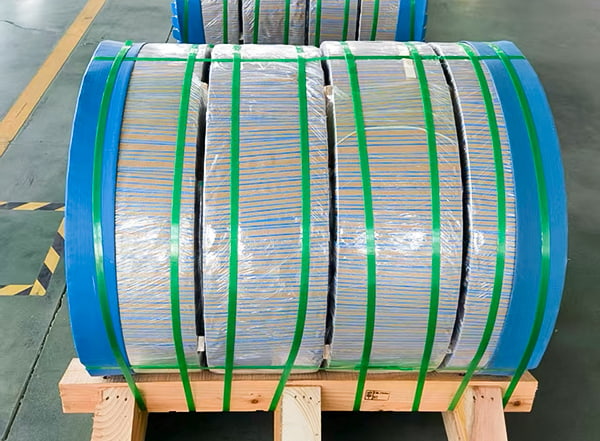
The most common first processing step for silicon steel mother coils is longitudinal slitting, in which the full-width coil is passed through a slitting line equipped with circular blades that divide it into multiple narrower strip coils simultaneously. These slit coils are then rewound onto individual mandrels and supplied to customers in the exact widths required for their specific stamping or winding operations. Precision in slitting is critical — width tolerances are typically specified to within ±0.1mm or tighter, and burr height at the slit edge must be minimized to avoid damage to insulation coatings during subsequent processing.
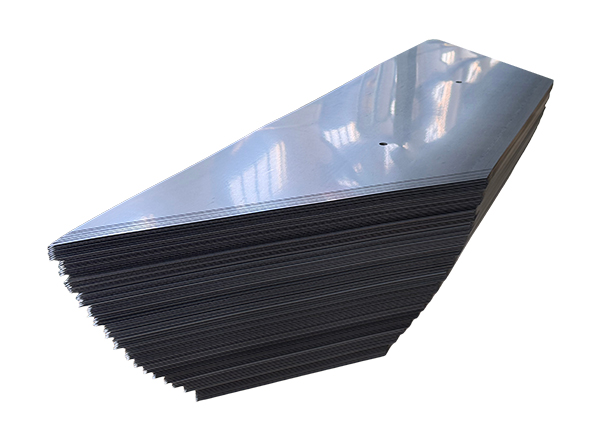
Some downstream applications require flat sheets rather than coils. Cut-to-length lines uncoil the mother coil, level it to remove coil set and crossbow, then shear it into flat sheets of precise length. These sheets are used for manually stacked transformer cores, prototype lamination development, and applications where coil-fed stamping is not available. Sheet flatness is particularly important for silicon steel because stacking non-flat laminations creates air gaps in assembled cores that increase core loss and reduce efficiency.
The final conversion step for most silicon steel is stamping — using progressive or compound dies to punch finished lamination shapes from the slit strip. For electric motor stators and rotors, complex shapes with precise slot geometries are stamped at high speed from NGOES strip. For transformer applications, simpler E-I, U-I, or step-lap lamination shapes are stamped from GOES or NGOES strip. Laser cutting is increasingly used for prototype and low-volume production where die costs are not justified, and for ultra-thin grades where conventional punching causes unacceptable edge deformation.
Silicon steel mother coils are produced and traded according to well-established international standards that define the maximum allowable core loss, minimum magnetic induction, and thickness for each grade. Familiarity with these standards is essential for buyers specifying material for electrical equipment that must meet efficiency regulations in export markets.
The demand for silicon steel mother coils is fundamentally tied to the global production of electrical equipment. As electrification accelerates across transportation, renewable energy generation, and industrial automation, the importance of high-quality silicon steel to the global energy economy continues to grow.
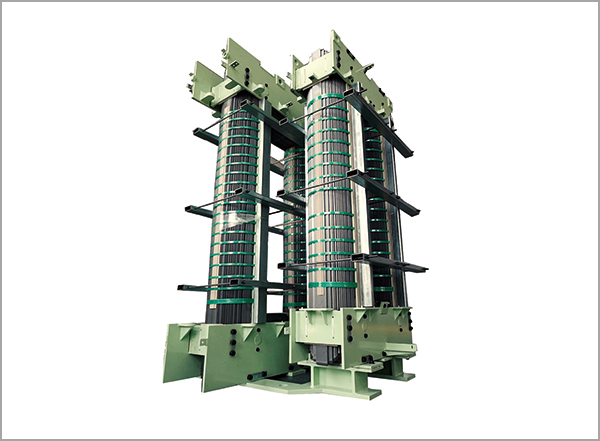
Grain-oriented silicon steel mother coils are the single most critical raw material input for the power transformer industry. Every transformer in the electrical grid — from large power transformers at generation and transmission substations down to distribution transformers serving residential neighborhoods — contains a laminated or wound silicon steel core. The efficiency of these cores directly determines the no-load losses that accumulate continuously throughout the operating life of the transformer, making core loss performance a central factor in transformer design and procurement decisions globally.
Non-grain-oriented silicon steel mother coils supply the lamination stock for electric motor stators and rotors across a vast range of applications — from fractional-horsepower motors in appliances and HVAC systems to the high-performance traction motors in battery electric vehicles. The rapid global growth of EV production has created significant new demand for high-grade, low-loss NGOES in thicknesses of 0.35mm and below, driving investment in new production capacity and accelerating the development of ultra-low-loss motor grades by leading steel producers.
Wind turbines, hydroelectric generators, and large industrial generators all rely on silicon steel laminations for their stator and rotor cores. The very large diameter and high pole count of direct-drive wind generator designs place particular demands on the magnetic isotropy and mechanical punchability of NGOES, while the large transformer banks associated with wind and solar farm grid connections consume substantial volumes of GOES mother coil material.
Sourcing silicon steel mother coils requires careful evaluation of both the material specifications and the supplier's production and quality assurance capabilities. Given the performance-critical nature of the material in finished electrical equipment, quality shortfalls in the mother coil can cascade into efficiency deficits, warranty failures, or regulatory non-compliance in the end product.
Tightening global energy efficiency regulations for transformers, motors, and generators are steadily driving demand toward higher-grade silicon steel mother coils with lower core loss values and thinner gauges. Standards such as the EU's Ecodesign Regulation for transformers, the US DOE efficiency standards for distribution transformers, and China's GB 20052 efficiency standards for motors are pushing manufacturers to upgrade from standard grades to premium and high-permeability grades that were previously reserved for specialized applications.
This trend is reinforced by the growth of electric vehicle production, grid-scale energy storage, and renewable power generation — all of which require high-performance electromagnetic components built from the best available silicon steel. For steel mills, processors, and electrical equipment manufacturers alike, silicon steel mother coils sit at the center of the global energy transition, making their quality, availability, and continued technical development a matter of strategic industrial importance well beyond the boundaries of the steel industry itself.

 +86-523 8891 6699
  +86-523 8891 8266
  info@tl-core.com
  No.1, Third Industrial Park, Liangxu Street, Taizhou City, Jiangsu, China
 Copyright © 2024 Taizhou Tianli Iron Core Manufacturing Co., Ltd. All Rights Reserved.




 Home
Home