

 English
 Español
 Türk
Türk 中文简体
中文简体
Home / News Room / Industry News / Silicon Steel Mother Coils: Properties, Types, and Industrial Uses
Content
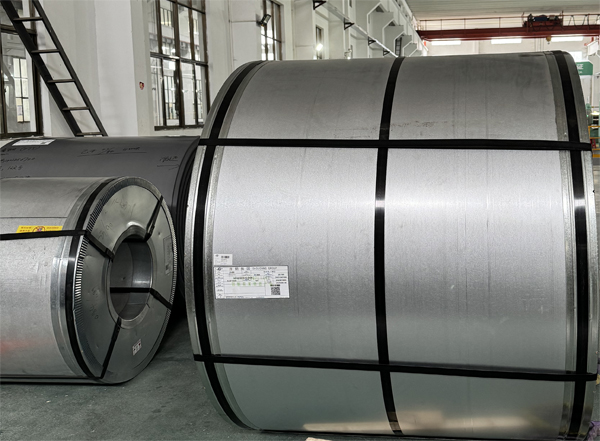
Silicon steel mother coils, also referred to as electrical steel master coils or silicon steel coils in their full-width, unprocessed form, are large rolls of silicon-alloyed steel strip produced directly from the rolling mill before any slitting, cutting, or further downstream processing has taken place. The term "mother coil" specifically refers to the full-width coil as it exits the final stage of hot or cold rolling, typically ranging from 600mm to over 1,200mm in width and weighing anywhere from 5 to 30 metric tons depending on the manufacturer and specification. These coils serve as the raw material source from which narrower slit coils, lamination blanks, and cut-to-length sheets are later derived.
Silicon steel itself is a specialized iron-silicon alloy in which silicon content typically ranges from 1% to 6.5% by weight. The addition of silicon significantly increases the electrical resistivity of the steel, which reduces eddy current losses when the material is exposed to alternating magnetic fields. This property makes silicon steel the dominant material used in the cores of transformers, electric motors, generators, inductors, and other electromagnetic devices. The quality, consistency, and dimensional precision of the mother coil directly determine the performance characteristics of every downstream product derived from it, making mother coil selection a critical decision in the supply chain of electrical and electronics manufacturing.
The production of silicon steel mother coils begins with the steelmaking process, where iron ore or scrap steel is melted and refined in a basic oxygen furnace or electric arc furnace. Silicon is introduced during the alloying stage to achieve the target composition. The molten steel is then continuously cast into slabs, which are subsequently hot-rolled into thin strip at high temperatures. For grain-oriented silicon steel (GOES), the hot-rolled strip undergoes a precisely controlled series of cold rolling passes and annealing cycles designed to develop a specific crystallographic texture — known as the Goss texture — in which the magnetic easy axis of the iron crystals aligns with the rolling direction. This alignment is what gives grain-oriented silicon steel its exceptional magnetic properties in one direction.
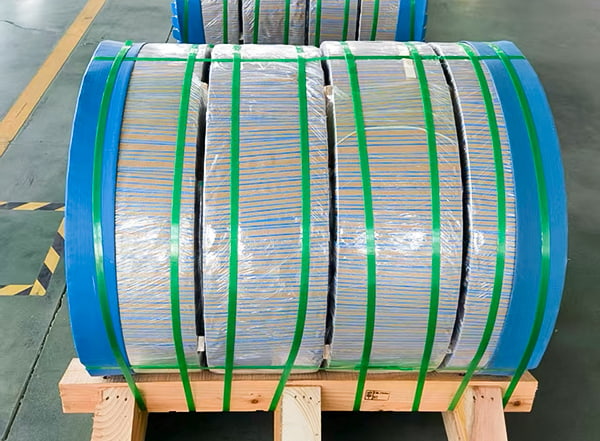
Non-oriented silicon steel (NOES) follows a simpler cold rolling and annealing process that does not aim to develop a preferred crystallographic orientation. Instead, the goal is to achieve uniform magnetic properties in all directions within the plane of the sheet. After final annealing, both types of silicon steel receive a surface insulating coating — typically a glass film, phosphate coating, or organic resin layer — that reduces inter-laminar eddy currents when the material is stacked or wound in transformer and motor cores. The finished strip is then wound into the large mother coil format for shipment or further processing at service centers.
The most fundamental classification of silicon steel mother coils is the distinction between grain-oriented and non-oriented grades. These two categories serve very different applications and have distinct material properties that must be understood before specifying or purchasing mother coils for any industrial application.
Grain-oriented silicon steel is engineered to have its superior magnetic properties concentrated along the rolling direction. When the magnetic flux in a transformer core is oriented parallel to the rolling direction of the laminations, grain-oriented material exhibits extremely low core losses and high magnetic permeability. This makes it the standard material for power transformers, distribution transformers, and large generator cores where the magnetic circuit design can take advantage of the directional properties. Silicon content in GOES typically ranges from 2.9% to 3.5%, and the material is usually supplied in thicknesses between 0.23mm and 0.35mm. High-permeability grain-oriented (HiB) grades offer even lower core losses through domain refinement achieved by laser scribing or mechanical scribing of the coil surface after final processing.
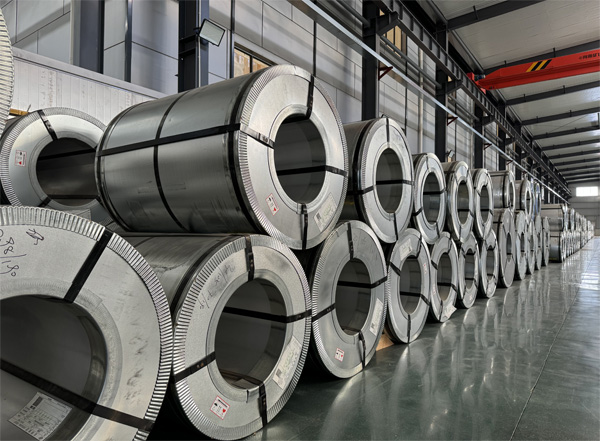
Non-oriented silicon steel provides more uniform magnetic performance in all in-plane directions, making it the preferred choice for rotating electrical machines such as motors and generators where the magnetic flux rotates rather than flowing in a fixed direction. NOES is available in a wider range of silicon contents — from below 1% for low-grade motor lamination steel up to 3.5% for high-efficiency motor grades — and in a broader range of thicknesses from 0.35mm to 0.65mm. Fully processed non-oriented grades are supplied in a ready-to-use condition after final annealing, while semi-processed grades require a stress-relief anneal after stamping to develop their final magnetic properties. Non-oriented silicon steel mother coils are the highest-volume product in the electrical steel market, driven by the enormous demand from electric motor manufacturing across industrial, appliance, and automotive sectors.
When evaluating or purchasing silicon steel mother coils, buyers and engineers must assess a range of technical parameters that define the material's suitability for their specific application. The most critical specifications include the following:
Silicon steel mother coils are classified and traded according to several international and national grade standards. Familiarity with these classification systems is essential for procurement, quality control, and cross-supplier comparison. The table below summarizes the main standards used globally:
| Standard | Region | Grade Example | Application |
| IEC 60404 | International | M330-35A | Motors, generators |
| ASTM A677 / A726 | USA | 35F168 | NOES motor laminations |
| JIS C 2552 | Japan | 50A400 | General electrical use |
| GB/T 2521 | China | 50W470 | Motors and transformers |
| EN 10107 | Europe | M089-27P | GOES transformer cores |
In most grading systems, the designation encodes key properties directly. For IEC-based grades such as M330-35A, the "M" prefix indicates electrical steel, "330" refers to the maximum core loss in watts per kilogram at the test condition, "35" denotes the nominal thickness in hundredths of a millimeter (0.35mm), and "A" indicates fully processed non-oriented grade. Understanding these coding conventions allows engineers and procurement teams to quickly compare grades across different suppliers and standards bodies.
Silicon steel mother coils are the upstream raw material for a vast range of end products in the electrical and power industries. Their downstream applications span multiple sectors and include some of the most critical infrastructure components in modern society.
Choosing the correct grade and specification of silicon steel mother coil requires a systematic evaluation of the end product's design requirements, operating conditions, and cost targets. The selection process should consider the following factors in sequence.
Begin by establishing the operating frequency, flux density, and efficiency targets for the core design. For power transformer applications at 50Hz or 60Hz with unidirectional flux, grain-oriented silicon steel with the lowest available core loss for the budget is the appropriate starting point. For rotating machines operating at standard industrial frequencies, fully processed non-oriented grades in the M250 to M400 range are typical. For high-frequency applications such as EV motors or switched-mode power supply cores, thinner gauges in the 0.20mm to 0.27mm range with higher silicon content are necessary to control eddy current losses at elevated frequencies.
Mother coil width must be specified to match the slitting or stamping equipment at the processing facility. Inner diameter — typically 508mm or 610mm — must be compatible with the coil handling mandrels and de-coilers used in the production line. Coil weight and outer diameter affect storage, transport, and handling logistics and should be specified within the capacity limits of the available equipment. Ordering mother coils that are incompatible with downstream processing equipment leads to costly reprocessing or the need for additional handling equipment.
For critical applications in power infrastructure or electric vehicle drivetrains, supplier qualification is as important as material specification. Reputable silicon steel producers provide mill test certificates confirming that each mother coil meets the specified magnetic and mechanical properties. Third-party testing and ISO 9001 or IATF 16949 certification are important quality assurance indicators. Consistent lot-to-lot quality is especially critical for high-volume stamping operations where variations in material hardness or thickness can cause die wear, dimensional inconsistency, and production downtime.

 +86-523 8891 6699
  +86-523 8891 8266
  info@tl-core.com
  No.1, Third Industrial Park, Liangxu Street, Taizhou City, Jiangsu, China
 Copyright © 2024 Taizhou Tianli Iron Core Manufacturing Co., Ltd. All Rights Reserved.




 Home
Home