Content
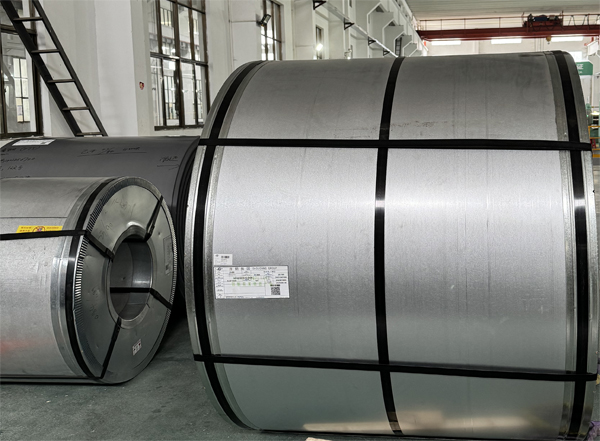
Silicon steel mother coils are large-format rolls of electrical steel — an iron-silicon alloy — produced at steel mills as the primary output form before downstream processing into narrower slit coils, lamination strips, or cut-to-length sheets. The term "mother coil" refers specifically to the wide, full-width coil in its as-produced state, before it has been slit, cut, or otherwise converted into the dimensions required by end-use manufacturers. These coils are the foundational raw material from which transformer cores, motor laminations, generator stators, and a broad range of electromagnetic components are ultimately fabricated.
The silicon content in these steels — typically ranging from 1.5% to 4.5% by weight — is the defining metallurgical feature that distinguishes electrical steel from ordinary carbon steel. Silicon dramatically increases the electrical resistivity of iron, which in turn reduces the eddy current losses that occur when alternating magnetic fields are applied to the material. This property is fundamental to the efficient operation of transformers and electric motors, where minimizing core losses directly translates into reduced energy consumption, lower operating temperatures, and longer equipment service life. As global demand for energy-efficient electrical equipment accelerates — driven by electric vehicle adoption, renewable energy infrastructure, and efficiency regulations — silicon steel mother coils have become increasingly strategically important raw materials.
The production of silicon steel mother coils is a sophisticated metallurgical process that requires precise control at every stage to achieve the magnetic and mechanical properties specified for different grades. The process begins with steelmaking, where iron ore or scrap steel is processed in electric arc furnaces or basic oxygen furnaces, with silicon and other alloying elements added to achieve the target composition. The molten steel is continuously cast into slabs, which are then hot-rolled into intermediate coils at elevated temperatures.
For grain-oriented silicon steel (GO steel) — the higher-performance category used in transformer cores — the hot-rolled coils undergo cold rolling in two stages, with a critical intermediate annealing step that allows primary recrystallization of the grain structure. A second cold rolling reduces the strip to final gauge, and a high-temperature final annealing step induces secondary recrystallization, causing the magnetic grain structure to align predominantly in the rolling direction. This precise grain alignment — the defining characteristic of grain-oriented steel — gives GO silicon steel its exceptional magnetic permeability in the rolling direction, which is why transformer core laminations must be oriented correctly during assembly.
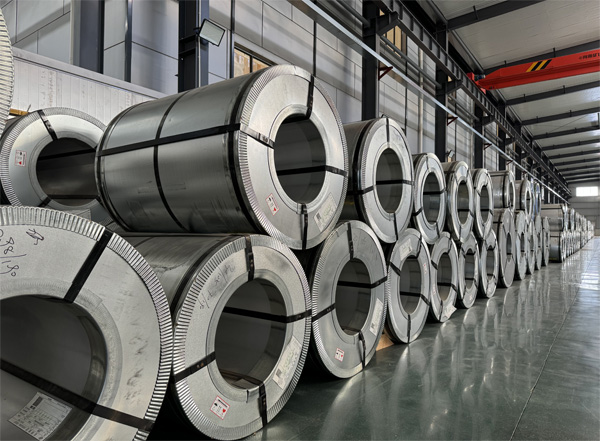
Non-grain-oriented silicon steel (NGO steel), used in rotating electrical machines like motors and generators, follows a simpler production route that typically involves a single cold rolling stage followed by continuous annealing. Because motors require consistent magnetic performance in all directions — the rotor and stator experience rotating magnetic fields rather than unidirectional flux — NGO steel is processed to achieve uniform magnetic properties across the plane of the sheet rather than optimizing a single direction.
Silicon steel mother coils are available in a range of grades standardized by international bodies including IEC, ASTM, JIS, and GB (Chinese national standard), with each grade optimized for specific performance requirements. Grade selection has a direct impact on the efficiency, size, and cost of the electrical equipment manufactured from the material.
| Grade Category | Silicon Content | Thickness Range | Primary Application |
| GO High Permeability (HiB) | ~3.0–3.2% | 0.23–0.30 mm | Power and distribution transformers |
| GO Conventional | ~3.0% | 0.27–0.35 mm | Distribution transformers, reactors |
| NGO Fully Processed | 1.5–3.5% | 0.35–0.65 mm | Electric motors, generators |
| NGO Semi-Processed | 1.5–3.0% | 0.50–0.65 mm | Small motors, ballasts |
| High Silicon NGO (EV grade) | 3.0–4.5% | 0.20–0.35 mm | Electric vehicle drive motors |
The numerical designation in many grading systems encodes key performance data. Under the IEC 60404 standard, a grade designated as M310-50A, for example, indicates a maximum core loss of 3.10 W/kg at 1.5 Tesla and 50 Hz, a nominal thickness of 0.50mm, and fully processed delivery condition. Understanding how to read these designations allows procurement engineers to quickly identify and compare grades across different supplier catalogs without having to cross-reference extensive technical documentation.
When sourcing silicon steel mother coils, a thorough understanding of the key technical parameters ensures that the material selected will perform as required in the finished electrical equipment. Several interconnected properties define the quality and suitability of a given coil for a specific application.
Core loss — measured in watts per kilogram at a specified magnetic flux density and frequency — is the single most important performance parameter for silicon steel used in power applications. It represents the energy dissipated as heat within the steel when subjected to an alternating magnetic field, and it directly determines the operating efficiency of transformers and motors. Lower core loss values indicate a higher-quality material that enables more efficient electrical equipment. Core loss is composed of hysteresis loss, eddy current loss, and anomalous loss, each of which is influenced by different aspects of the steel's composition, grain structure, and surface coating.
Magnetic permeability describes how easily a material can be magnetized — the higher the permeability, the less magnetomotive force is required to drive a given level of magnetic flux through the core. High permeability in grain-oriented steel allows transformer designers to reduce the number of winding turns needed to achieve the required flux, leading to smaller, lighter, and less costly transformer designs. For HiB grade GO steel, permeability values are substantially higher than conventional GO grades, which is why HiB material commands a price premium despite being used in the same applications.
Thickness consistency across the width and length of a mother coil has significant practical implications for downstream processing. Variations in thickness affect the stacking factor — the ratio of actual steel cross-section to the nominal core cross-section in a laminated stack — which directly impacts both magnetic performance and dimensional accuracy of the assembled core. Flatness is equally important; coils with excessive shape defects such as edge waves or center buckles cause problems in slitting, punching, and lamination assembly operations, increasing scrap rates and reducing production efficiency.
Silicon steel mother coils are supplied with a thin insulating coating applied to both surfaces to electrically isolate adjacent laminations in a stacked core assembly and to prevent interlaminar eddy current flow. The coating type — designated by letters in the grade specification such as A (inorganic), C (organic/inorganic composite), or S (semi-organic) — determines the coating's insulation resistance, heat resistance, punchability, and weldability. Selecting the appropriate coating type for the manufacturing process and application environment is an important technical decision that is often underweighted in procurement decisions focused primarily on core loss values.
The downstream applications of silicon steel mother coils span virtually the entire spectrum of electrical power generation, transmission, distribution, and conversion equipment. The material is indispensable to modern electrical infrastructure, and its demand is directly coupled to global investment in power systems and electrification.
Procurement of silicon steel mother coils involves navigating a complex set of technical, commercial, and logistical factors that distinguish it from the sourcing of commodity steel products. The material's specialized production requirements mean that the global supply base is concentrated among a relatively small number of major producers, and quality verification is essential before integrating a new supply source into production.
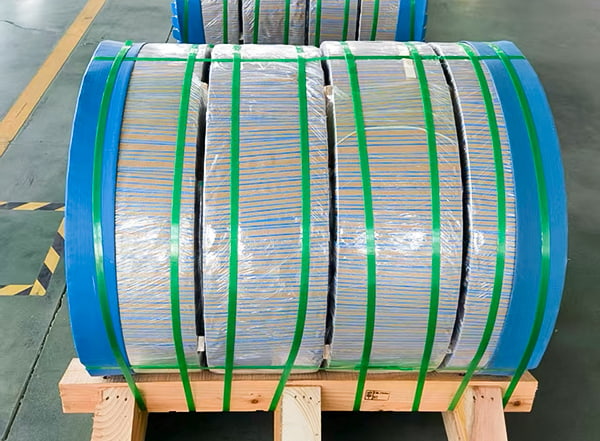
Incoming quality inspection of silicon steel mother coils should be a structured process that verifies both physical and magnetic properties before the material enters production. Visual inspection of coil condition — checking for surface defects, edge damage, coil telescoping, and packaging integrity — should be conducted immediately upon receipt and before coil handling equipment is used to move the material into storage. Any damage observed should be documented photographically and reported to the supplier and freight carrier before the coil is moved or unwrapped.
Dimensional verification using calibrated measuring equipment should confirm that coil width, inner and outer diameters, and strip thickness at multiple points across the coil width fall within the tolerances specified in the purchase order and mill certificate. Thickness measurements taken at the center and both edges of the strip are minimum requirements; high-precision applications may require more extensive across-width profiling using contact or non-contact thickness measurement systems.
Magnetic property verification requires laboratory testing using an Epstein frame or single sheet tester per IEC 60404-2 or equivalent standard procedures. While it is not practical to test every coil in a large shipment, a statistically representative sampling plan — typically one sample per heat or production lot — provides meaningful quality assurance data. Results should be compared against the mill certificate values and the purchase specification limits. Discrepancies between measured values and certified values are grounds for non-conformance reporting and should trigger a formal supplier corrective action process to prevent recurrence in future supply lots.

 +86-523 8891 6699
  +86-523 8891 8266
  info@tl-core.com
  No.1, Third Industrial Park, Liangxu Street, Taizhou City, Jiangsu, China
 Copyright © 2024 Taizhou Tianli Iron Core Manufacturing Co., Ltd. All Rights Reserved.




 English
 Español
 Türk
Türk 中文简体
中文简体


 Home
Home