

 English
 Español
 Türk
Türk 中文简体
中文简体
Home / News Room / Industry News / Where Are Silicon Steel Mother Coils Used and Why Do They Matter?
Content
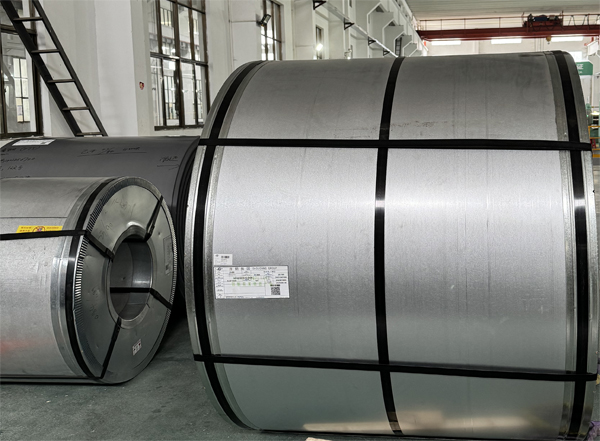
Silicon steel mother coils — large-format master rolls of grain-oriented or non-oriented electrical steel produced at the mill and subsequently slit into narrower strip widths for downstream processing — sit at the foundation of the global electrical equipment supply chain. Every transformer, motor, generator, and electromagnetic core that converts or transmits electrical energy efficiently relies on lamination stacks punched, cut, or wound from silicon steel strip that originated in a mother coil. Understanding where these coils are used, why specific grades are specified for each application, and how their properties determine system performance is essential for procurement engineers, product designers, and electrical equipment manufacturers.
Silicon steel — formally called electrical steel — is a ferrosilicon alloy containing between 1.5% and 4.5% silicon by weight. The silicon content increases the material's electrical resistivity, which directly reduces eddy current losses when the steel is subjected to alternating magnetic fields. This property is the fundamental reason silicon steel is the material of choice for electromagnetic core applications: it allows efficient magnetic flux conduction while minimizing the resistive heating that would otherwise dissipate energy as waste heat in any alternating current device.
Mother coils are produced at integrated steel mills in widths typically ranging from 600 mm to 1,250 mm and are wound to weights of 3 to 30 tonnes depending on the downstream processing requirements. They are produced in two fundamental categories: grain-oriented (GO) silicon steel, in which the crystal structure is aligned during cold rolling to optimize magnetic permeability in the rolling direction, and non-oriented (NO) silicon steel, in which the crystal structure is more randomly distributed to provide more isotropic magnetic properties. The choice between these categories is determined entirely by the application's magnetic flux directionality requirements, making grade selection the first and most consequential decision in silicon steel mother coil specification.
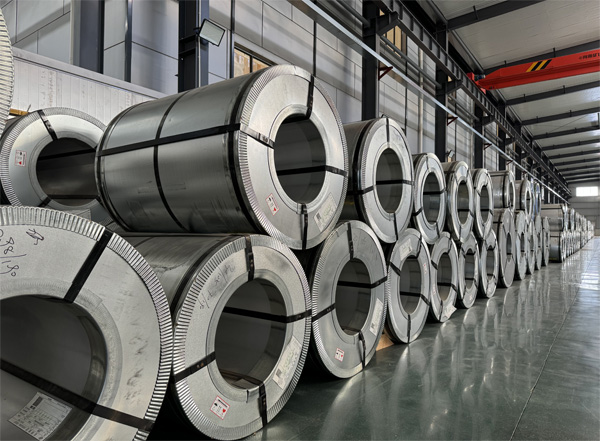
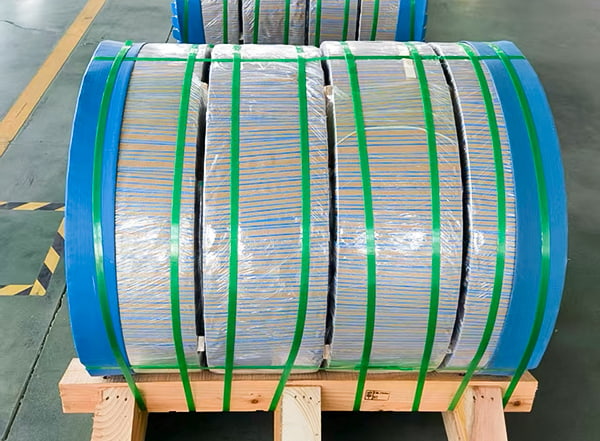
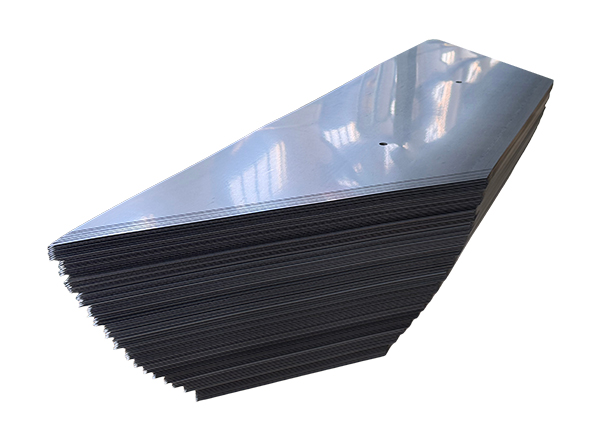
From the mother coil, steel service centers slit the material to application-specific strip widths, apply insulating coatings where required, and supply the slit coils to lamination stamping operations, core winding lines, or laser cutting systems that produce the finished core geometry. The mother coil's dimensional consistency, surface quality, and magnetic uniformity across its full width and length directly determine the quality and consistency of every lamination produced from it.
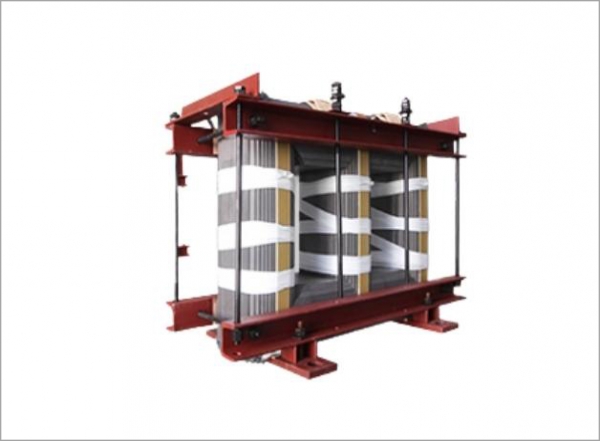
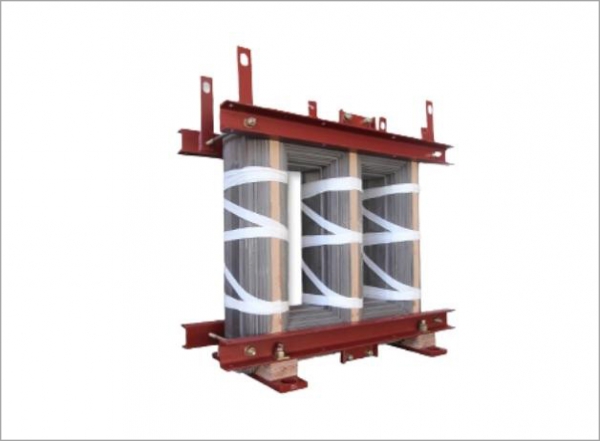
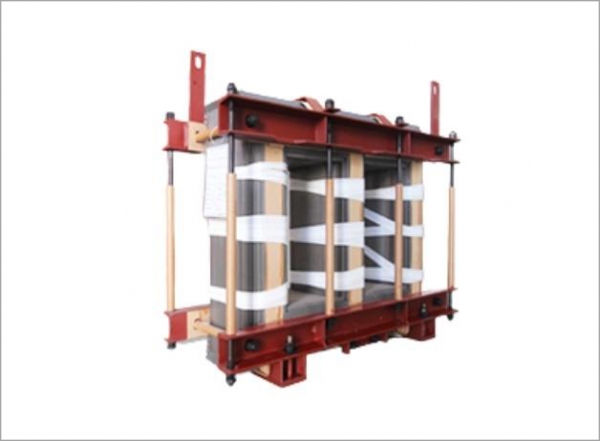
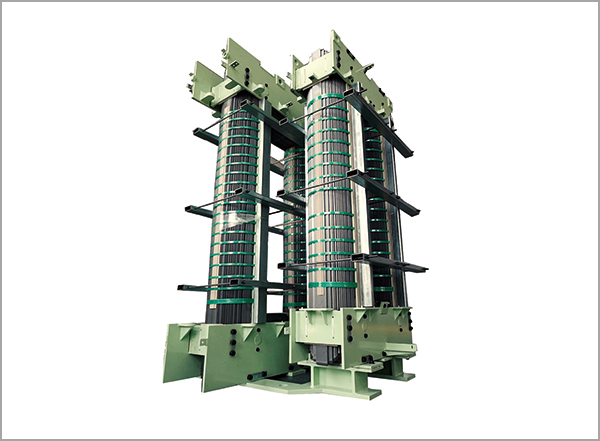
Power transformers — from distribution transformers serving residential neighborhoods to large power transformers rated at hundreds of MVA for transmission substations — represent the dominant application for grain-oriented silicon steel mother coils globally. The core of a power transformer must conduct magnetic flux with minimum energy loss through thousands of cycles per second over a service life of 25 to 40 years, and no other material achieves the combination of high saturation flux density, low core loss, and dimensional stability that grain-oriented silicon steel provides at commercially viable cost.
Power transformer core loss — expressed in watts per kilogram at a specified flux density and frequency — is the primary parameter driving grain-oriented silicon steel grade selection. High-permeability grain-oriented (HiB) grades, produced with tighter crystal orientation control than conventional GO steel, achieve core losses below 0.80 W/kg at 1.7 Tesla and 50 Hz — a performance level that reduces no-load losses across a transformer's decades of continuous operation by hundreds of megawatt-hours compared to standard GO grades. Distribution transformer manufacturers operating in energy efficiency-regulated markets specify HiB or domain-refined grades specifically because utility regulations and efficiency standards such as EU Tier 2 and DOE 2016 mandate maximum no-load loss figures that only premium grades can satisfy.
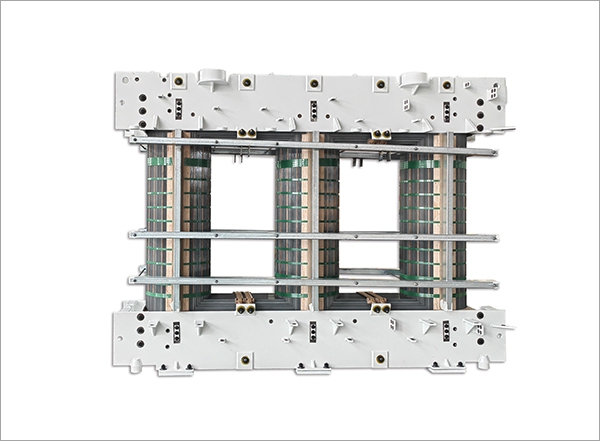
Large power transformer cores are assembled using step-lap lamination stacking — a technique in which successive lamination layers are cut at slightly different angles at the corner miters to distribute flux transfer stress across multiple overlapping joints rather than concentrating it at a single point. This construction method requires strip slit from mother coils with extremely tight thickness tolerance (typically ±0.01 mm) and consistent burr height after stamping. Distribution transformer cores are increasingly produced as wound cores — where strip is wound continuously into a toroidal or rectangular ring form — a process that produces zero scrap and near-zero air gaps in the core joints, reducing no-load losses by 15 to 25% compared to stacked lamination cores of equivalent grade.
Non-oriented silicon steel mother coils are the primary input material for electric motor stator and rotor laminations. Unlike transformer cores where flux travels in a fixed direction, motor cores carry rotating magnetic flux that passes through the lamination plane in all directions as the rotor turns. This rotating flux requires isotropic magnetic properties — consistent permeability regardless of measurement direction — which is precisely what non-oriented grades provide. The explosive growth of electric vehicle production, industrial automation, and high-efficiency pump and fan motor markets has driven non-oriented silicon steel demand to record levels and positioned motor lamination as the largest volume application for silicon steel globally by unit weight.
Electric vehicle traction motors operate at significantly higher electrical frequencies than industrial motors — typically 400 Hz to 1,000 Hz during high-speed driving — which dramatically increases eddy current losses in standard non-oriented silicon steel grades. Premium thin-gauge non-oriented grades with thicknesses of 0.20 mm to 0.35 mm and higher silicon content (3.0% to 3.5%) are specified for EV traction motor laminations because thinner laminations reduce eddy current path lengths, directly cutting iron losses at high frequency. The mother coil surface quality for these applications must be exceptional — any surface defect or thickness variation translates directly into increased iron loss or mechanical imbalance in the finished motor stator stack.
Standard industrial motors operating at 50 Hz or 60 Hz from three-phase supplies use non-oriented silicon steel grades with thicknesses of 0.50 mm to 0.65 mm, where the balance between iron loss, mechanical strength, and material cost is optimized for continuous duty operation rather than peak efficiency at elevated speed. Appliance motors — compressors, washing machine drums, air conditioning fans — use the full range of non-oriented grades from economy grades for cost-sensitive applications to semi-processed grades that are annealed after stamping to relieve machining stress and recover the magnetic properties degraded during punching, achieving motor efficiencies required by efficiency labeling regulations such as IE3 and IE4 classifications.
Generators for power generation — from small diesel gensets used in emergency backup systems to large hydro and wind turbine generators rated at several megawatts — use silicon steel laminations in both their stator and rotor cores. The stator core of a generator functions similarly to a transformer core in that it carries magnetic flux induced by the rotating rotor field, making non-oriented silicon steel the appropriate material for most generator stator applications. Thin-gauge, low-loss non-oriented grades are specified for high-speed generators where frequency is elevated, while standard-gauge grades serve lower-speed applications where flux frequency is close to the utility network frequency.
Wind turbine generators present a particularly demanding application scenario. The stator core of a direct-drive permanent magnet wind generator may have an outer diameter exceeding four meters and contain tens of thousands of individual laminations, all punched from slit non-oriented silicon steel strip sourced from large-format mother coils. The consistency requirements across the full mother coil width and length are extreme — any variation in permeability or thickness introduces cogging torque and vibration into the generator output that reduces energy yield and accelerates mechanical fatigue. Premium wind-specific non-oriented grades with tightly controlled magnetic uniformity across full coil width are specified by leading turbine OEMs for this reason.
Beyond the major application categories, silicon steel mother coils supply a range of specialty electromagnetic core applications that each impose specific material requirements distinct from power transformer or motor use.
Selecting the correct silicon steel mother coil grade for a specific application requires matching the application's magnetic, mechanical, and processing requirements to the material's published properties. The following table summarizes the principal application categories with their typical grade specifications:
| Application | Steel Type | Typical Thickness | Key Property Requirement |
|---|---|---|---|
| Power / distribution transformer | Grain-oriented (HiB) | 0.23 – 0.30 mm | Ultra-low core loss in rolling direction |
| EV traction motor | Non-oriented (high Si, thin) | 0.20 – 0.35 mm | Low loss at high frequency, isotropic permeability |
| Industrial motor (IE3/IE4) | Non-oriented (semi-processed) | 0.50 – 0.65 mm | Consistent permeability, annealable after stamping |
| Wind turbine generator | Non-oriented (premium) | 0.35 – 0.50 mm | Uniform permeability across full coil width |
| Instrument / current transformer | Grain-oriented (domain refined) | 0.23 – 0.27 mm | High permeability, low remanence |
| HF power supply transformer | Non-oriented (ultra-thin) | 0.08 – 0.20 mm | Minimum eddy current loss at 20–200 kHz |
Several emerging technology applications are creating new and more demanding requirements for silicon steel mother coils beyond traditional power infrastructure and conventional motor applications.
The breadth of application scenarios served by silicon steel mother coils — from century-old power transformer technology to next-generation EV drivetrains and solid-state power conversion — reflects the material's fundamental and irreplaceable role in electrical energy conversion. Each application imposes a distinct combination of magnetic, dimensional, and surface quality requirements that trace directly back to the mother coil's production parameters, making the specification of the correct grade, thickness, and coating system one of the most consequential engineering decisions in electromagnetic core design.

 +86-523 8891 6699
  +86-523 8891 8266
  info@tl-core.com
  No.1, Third Industrial Park, Liangxu Street, Taizhou City, Jiangsu, China
 Copyright © 2024 Taizhou Tianli Iron Core Manufacturing Co., Ltd. All Rights Reserved.




 Home
Home