Content
At the heart of every power distribution transformer sits a component that most engineers and procurement specialists rarely examine in close detail — the transformer core. Yet this assembly of carefully selected magnetic materials, precisely cut laminations, and meticulously controlled geometry is responsible for the transformer's fundamental ability to transfer electrical energy between circuits at different voltage levels with minimal loss. The performance characteristics of the core directly determine the transformer's no-load losses, magnetizing current, efficiency rating, acoustic noise level, and long-term thermal behavior. Whether you are specifying transformers for a utility substation, an industrial facility, a renewable energy installation, or a commercial building, understanding how transformer cores work and what distinguishes a high-quality core from an inferior one is essential knowledge for making sound technical and procurement decisions.
The transformer core performs one essential electromagnetic function: it provides a low-reluctance magnetic pathway that channels the flux generated by the primary winding and links it efficiently to the secondary winding, enabling energy transfer through electromagnetic induction. When alternating current flows through the primary winding, it generates a time-varying magnetic field. The core confines and concentrates this field, guiding it through the secondary winding turns to induce a voltage proportional to the turns ratio between primary and secondary.
Without a high-permeability core, the magnetic coupling between windings would be extremely weak — the vast majority of magnetic flux would dissipate into the surrounding air rather than linking the secondary winding, resulting in a transformer with poor voltage regulation, extremely high magnetizing current, and negligible energy transfer capability. The core's magnetic permeability — its ability to concentrate magnetic flux relative to air — is the physical property that makes efficient power transformation possible. Modern grain-oriented electrical steel cores achieve permeability values thousands of times greater than air, allowing compact, efficient transformer designs that would be physically impossible with any alternative magnetic circuit configuration.
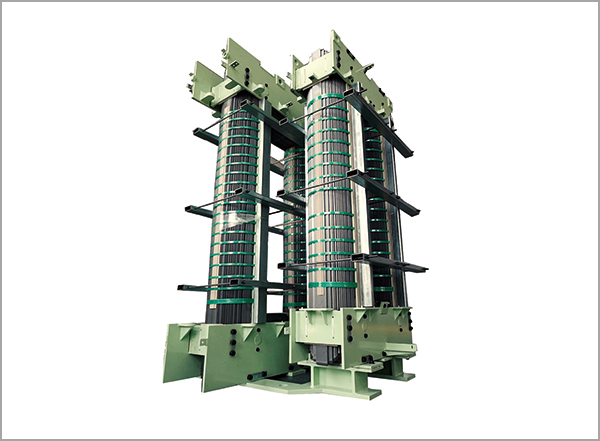
Every transformer core operating on alternating current dissipates a portion of the input energy as heat — a quantity referred to collectively as core loss or iron loss. These losses occur continuously whenever the transformer is energized, regardless of whether any load is connected to the secondary, which is why they are also called no-load losses. Minimizing core losses is one of the primary objectives in distribution transformer design, particularly for utility transformers that remain energized 24 hours a day for decades. Understanding the two principal loss mechanisms is essential for evaluating core material and design choices.
Hysteresis loss occurs because the magnetic domains within the core material resist reversal as the alternating magnetic flux cycles between positive and negative peaks 50 or 60 times per second. Energy is consumed in overcoming this domain wall resistance and realigning the magnetic domains with each flux cycle. The magnitude of hysteresis loss is proportional to the area enclosed by the B-H (magnetic flux density versus magnetic field strength) hysteresis loop of the core material — a smaller loop area means lower hysteresis loss per cycle. Grain-oriented silicon steel, developed specifically to minimize this loop area along the rolling direction, is the standard material for low-loss distribution transformer cores. Its oriented crystal structure allows magnetic domains to align and reverse with significantly less energy expenditure than non-oriented steel.
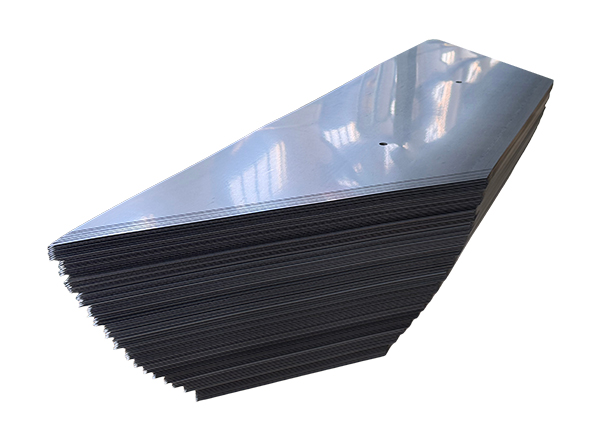
Eddy current loss arises from the electrical conductivity of the core material itself. The time-varying magnetic flux induces circulating electrical currents — eddy currents — within the core, and these currents dissipate energy as resistive heat. The magnitude of eddy current loss scales with the square of the lamination thickness, which is why distribution transformer cores are always constructed from thin laminated sheets rather than solid steel blocks. Standard distribution transformer laminations are 0.23mm to 0.35mm thick, with thinner laminations used in high-frequency or high-efficiency designs. The silicon content in electrical steel (typically 3–3.5% by weight) increases the material's electrical resistivity by approximately four times compared to pure iron, directly reducing eddy current magnitude and loss at a given flux density and lamination thickness.
The choice of core material is the single most influential design decision affecting a distribution transformer's no-load loss performance, magnetizing current, and lifecycle energy cost. Different material technologies represent distinct points on the cost-versus-performance spectrum, and each has a defined set of applications where it delivers the best value proposition.
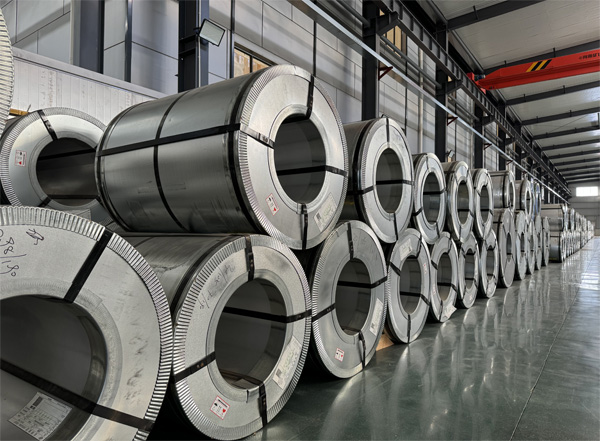
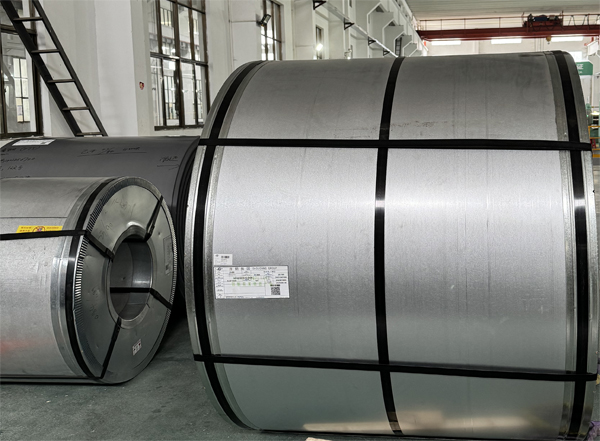
Grain-oriented electrical steel is the dominant core material for distribution transformers worldwide. Produced through a carefully controlled cold-rolling and annealing process that aligns the steel's grain structure predominantly in the rolling direction, GOES achieves low core loss and high permeability when the magnetic flux flows along the rolling direction — which is the design intent in wound and stacked core configurations. High-permeability GOES grades, designated HiB or domain-refined grades, achieve specific core losses as low as 0.8–1.0 W/kg at 1.7T and 50Hz, compared to 1.3–1.6 W/kg for conventional GOES grades. The selection of specific GOES grade directly determines the transformer's declared no-load loss performance and its compliance with energy efficiency standards such as Tier 2 (USA), Level AA (Australia), or EU Ecodesign Regulation 2019/1781.
Amorphous metal — produced by rapidly quenching molten iron-boron-silicon alloy at cooling rates exceeding one million degrees Celsius per second — has a disordered, non-crystalline atomic structure that results in dramatically lower coercive force and hysteresis loss than any grain-oriented crystalline steel. Amorphous metal transformer cores achieve no-load losses 60–70% lower than conventional GOES cores at equivalent flux densities. The primary limitations are higher material cost, lower saturation flux density (approximately 1.56T versus 2.0T for GOES), and the material's extreme brittleness and thinness (typical ribbon thickness: 0.025mm), which demands specialized winding and core assembly equipment. Amorphous metal core transformers are widely deployed in energy efficiency programs in China, India, and increasingly in North America and Europe, where their superior no-load loss performance generates substantial lifetime energy savings that justify the higher initial capital cost.
Nanocrystalline alloys occupy a performance position between amorphous metals and conventional GOES, offering very low core loss combined with higher saturation flux density than amorphous materials. They are currently used primarily in high-frequency power electronic transformers, instrument transformers, and specialty distribution applications rather than mainstream power frequency distribution transformers, owing to their significantly higher cost per kilogram compared to silicon steel.
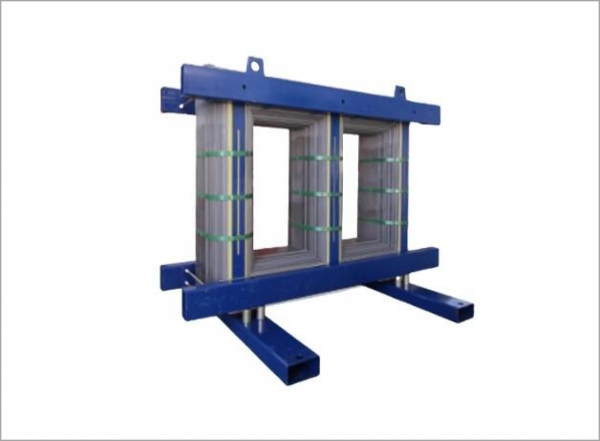
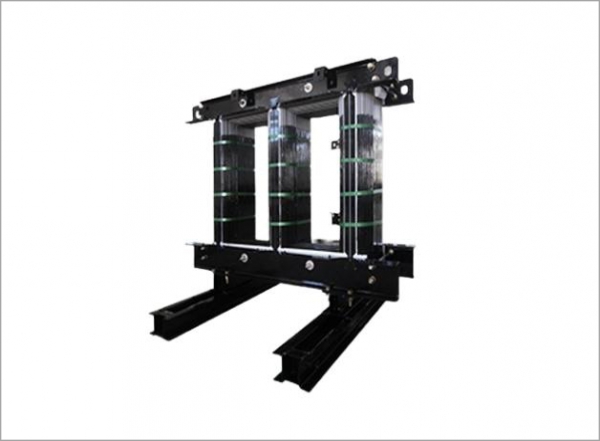
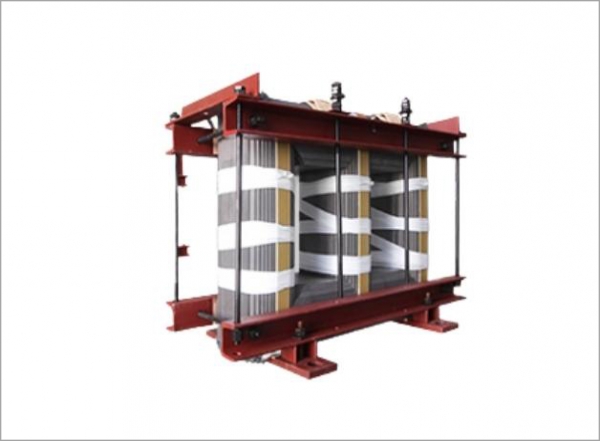
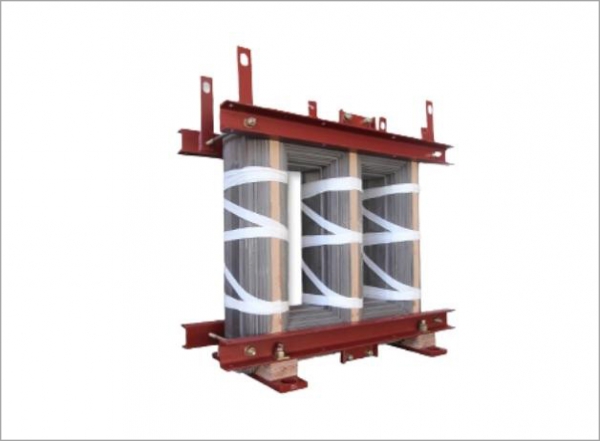
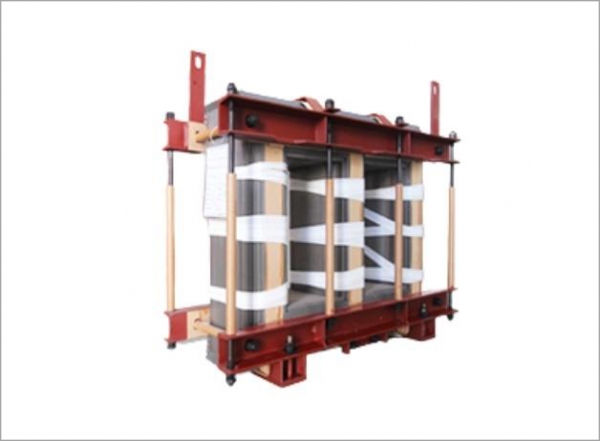
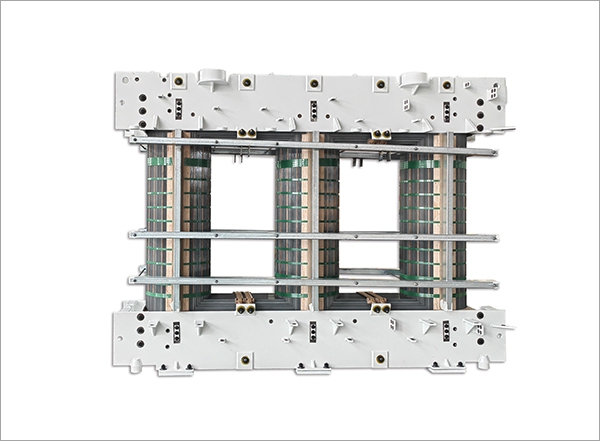
The geometric configuration of the core — how the magnetic circuit is physically assembled from the raw lamination material — has a direct effect on performance, manufacturing cost, and the transformer's suitability for different voltage and power rating ranges. Two primary configurations dominate distribution transformer production.
When evaluating or specifying a power distribution transformer core — whether as a component for transformer manufacturing or as part of a complete transformer procurement — several measurable parameters define the core's quality and performance level. The table below summarizes the most critical specifications and their practical significance:
| Parameter | Typical Values | Practical Significance |
| Specific Core Loss (W/kg) | 0.8 – 1.6 W/kg @ 1.7T, 50Hz (GOES) | Directly determines transformer no-load loss and lifetime energy cost |
| Saturation Flux Density (Bsat) | 1.56T (amorphous) – 2.03T (GOES) | Higher Bsat allows more compact core design at same power rating |
| Operating Flux Density (Bop) | 1.5T – 1.75T (GOES distribution) | Must maintain adequate margin below Bsat to prevent overexcitation loss spike |
| Magnetizing Current (%) | 0.5% – 3% of rated current | Lower value indicates better core permeability and joint quality |
| Lamination Thickness | 0.23mm – 0.35mm (GOES) | Thinner laminations reduce eddy current loss at the cost of higher stacking labor |
| Stacking Factor | 0.95 – 0.98 | Higher factor means more steel cross-section per unit core dimension — better flux carrying capacity |
| Acoustic Noise Level (dB) | 45 – 65 dB (distribution range) | Critical for urban and residential substation installations |
Even the highest-grade lamination steel will underperform if the core assembly process introduces mechanical stress, contamination, or geometric imprecision into the finished core. The manufacturing quality of the core assembly is as significant as the material specification in determining the transformer's actual measured performance compared to its design target.
Regulatory energy efficiency standards for distribution transformers have become progressively more stringent over the past two decades, directly driving the adoption of higher-grade core materials and improved manufacturing processes. These standards define maximum permissible no-load loss values — which are directly governed by core design and material quality — as well as load loss limits for transformers sold into regulated markets.
In the United States, DOE 10 CFR Part 431 mandates efficiency levels for liquid-immersed distribution transformers that effectively require high-permeability GOES or equivalent performance. The European Union's Ecodesign Regulation 2019/1781 establishes Tier 1 requirements that took effect in July 2021 and Tier 2 requirements from July 2025, with Tier 2 no-load loss limits for medium power transformers representing approximately 20% reduction below Tier 1 levels — a reduction achievable only through the use of domain-refined high-permeability GOES or amorphous metal cores in most transformer size classes. China's GB 20052 standard and India's IS 1180 efficiency requirements follow similar frameworks, reflecting a global regulatory convergence toward maximum core loss values that necessitate careful core material selection rather than simply meeting dimensional and voltage specifications.
For procurement engineers and transformer manufacturers, understanding the specific efficiency tier required by the target market — and mapping that requirement to the core material grade and construction quality needed to achieve it — is essential project planning work that must happen before lamination or core sourcing decisions are finalized. A transformer that fails to meet the declared no-load loss at type test due to substandard core material or assembly quality faces rejection, costly rework, and potential regulatory consequences that far exceed the material cost savings that drove the compromise in the first place.

 +86-523 8891 6699
  +86-523 8891 8266
  info@tl-core.com
  No.1, Third Industrial Park, Liangxu Street, Taizhou City, Jiangsu, China
 Copyright © 2024 Taizhou Tianli Iron Core Manufacturing Co., Ltd. All Rights Reserved.




 English
 Español
 Türk
Türk 中文简体
中文简体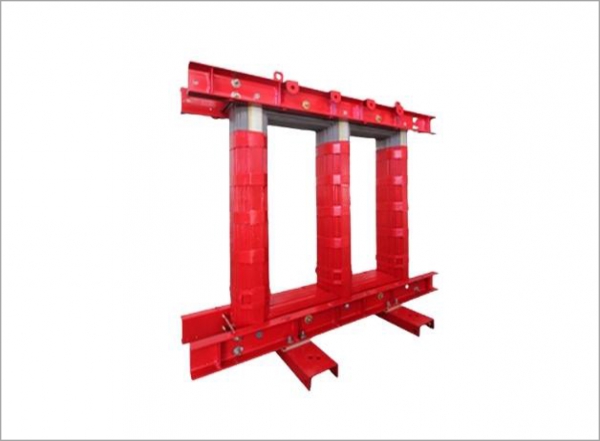


 Home
Home