

 English
 Español
 Türk
Türk 中文简体
中文简体
Home / News Room / Industry News / Which Industries Commonly Use Dry-Type Transformer Cores and Why Are They Preferred?
Content
Dry-type transformer cores are critical components in modern electrical systems, providing reliable voltage transformation without the use of liquid insulation. Unlike oil-filled transformers, these cores rely on air or other solid insulation to dissipate heat, offering advantages in safety, maintenance, and environmental impact. Their versatility and robust design make them suitable for a wide range of industrial applications.
This article explores the industries that commonly use dry-type transformer cores and explains the reasons behind their preference, focusing on performance, cost-effectiveness, and operational safety.
One of the primary industries utilizing dry-type transformer cores is construction, particularly in commercial buildings. These transformers are ideal for indoor installation due to their non-flammable insulation, reducing fire risk in populated areas. They are often deployed in office towers, shopping malls, hospitals, and educational institutions where safety, reliability, and low maintenance are paramount.
The compact design of dry-type transformers allows for easy installation in tight spaces, such as electrical rooms or basements, without the need for extensive fireproofing or containment systems required for oil-filled transformers.
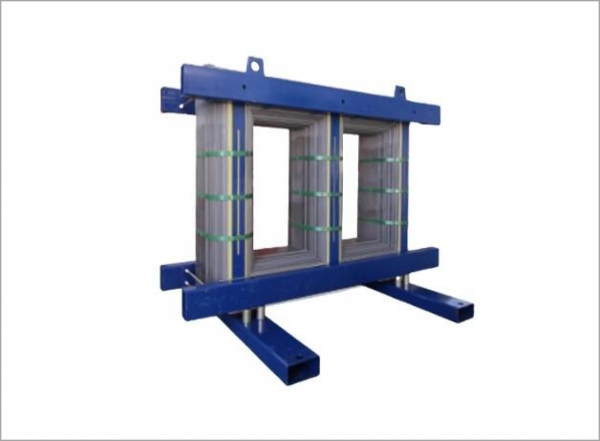
Industrial manufacturing facilities require stable and high-quality power for machinery and production lines. Dry-type transformer cores are preferred because they provide excellent voltage regulation and are resistant to short-circuit damage. Common applications include automotive manufacturing plants, chemical processing facilities, and metal fabrication workshops.
These transformers can operate in dusty or humid environments when combined with appropriate enclosures, minimizing downtime and maintenance costs. Their durability ensures long-term reliability, which is critical for continuous production processes.
The renewable energy sector increasingly relies on dry-type transformer cores for wind farms, solar power plants, and biomass energy facilities. Their environmental friendliness, due to the absence of oil, reduces the risk of soil and water contamination in case of failure. Additionally, dry-type transformers tolerate varying load conditions and can be placed close to generation sources without special containment.
In solar photovoltaic plants, for instance, dry-type transformers are used to step up low-voltage output from inverters to medium-voltage levels for grid integration. Similarly, wind farms utilize these transformers in substations to improve safety and reliability under harsh outdoor conditions.
Data centers require stable, uninterrupted power to prevent downtime and protect sensitive equipment. Dry-type transformer cores are preferred for their reduced fire risk, low maintenance, and compact footprint, allowing installation near server racks or within confined electrical rooms.
Their ability to operate efficiently at partial loads also improves energy efficiency, which is critical in large-scale data centers that run 24/7. Furthermore, these transformers produce lower noise levels, enhancing the working environment for employees and reducing interference with sensitive electronics.
Hospitals, laboratories, and pharmaceutical facilities often install dry-type transformer cores to ensure safety and continuous power supply. Fire safety regulations are strict in these environments, making non-oil transformers a preferred choice. Reliable voltage transformation ensures sensitive equipment, such as MRI machines, centrifuges, and refrigeration units, operates without interruption.
The minimal maintenance requirements and reduced risk of contamination make dry-type transformers particularly valuable in sterile and controlled environments where operational downtime can have severe consequences.
Infrastructure projects such as airports, rail systems, tunnels, and subways frequently use dry-type transformer cores due to their safety, compact size, and reliability. These transformers are well-suited for confined spaces and high-traffic areas where oil-filled transformers would pose a fire hazard.
Additionally, dry-type transformers tolerate vibrations and environmental stresses, making them suitable for transportation hubs where stable power is critical for signaling systems, lighting, and operational equipment.
Several features make dry-type transformer cores a preferred choice across these industries:
Dry-type transformer cores are widely adopted across multiple industries due to their safety, low maintenance, and environmental benefits. From construction and industrial facilities to renewable energy, healthcare, data centers, and transportation infrastructure, these transformers offer reliable voltage transformation while minimizing operational risks.
Understanding the unique advantages and applications of dry-type transformer cores enables engineers, facility managers, and designers to select the right transformer solutions that meet safety standards, improve efficiency, and ensure long-term operational reliability.

 +86-523 8891 6699
  +86-523 8891 8266
  info@tl-core.com
  No.1, Third Industrial Park, Liangxu Street, Taizhou City, Jiangsu, China
 Copyright © 2024 Taizhou Tianli Iron Core Manufacturing Co., Ltd. All Rights Reserved.




 Home
Home